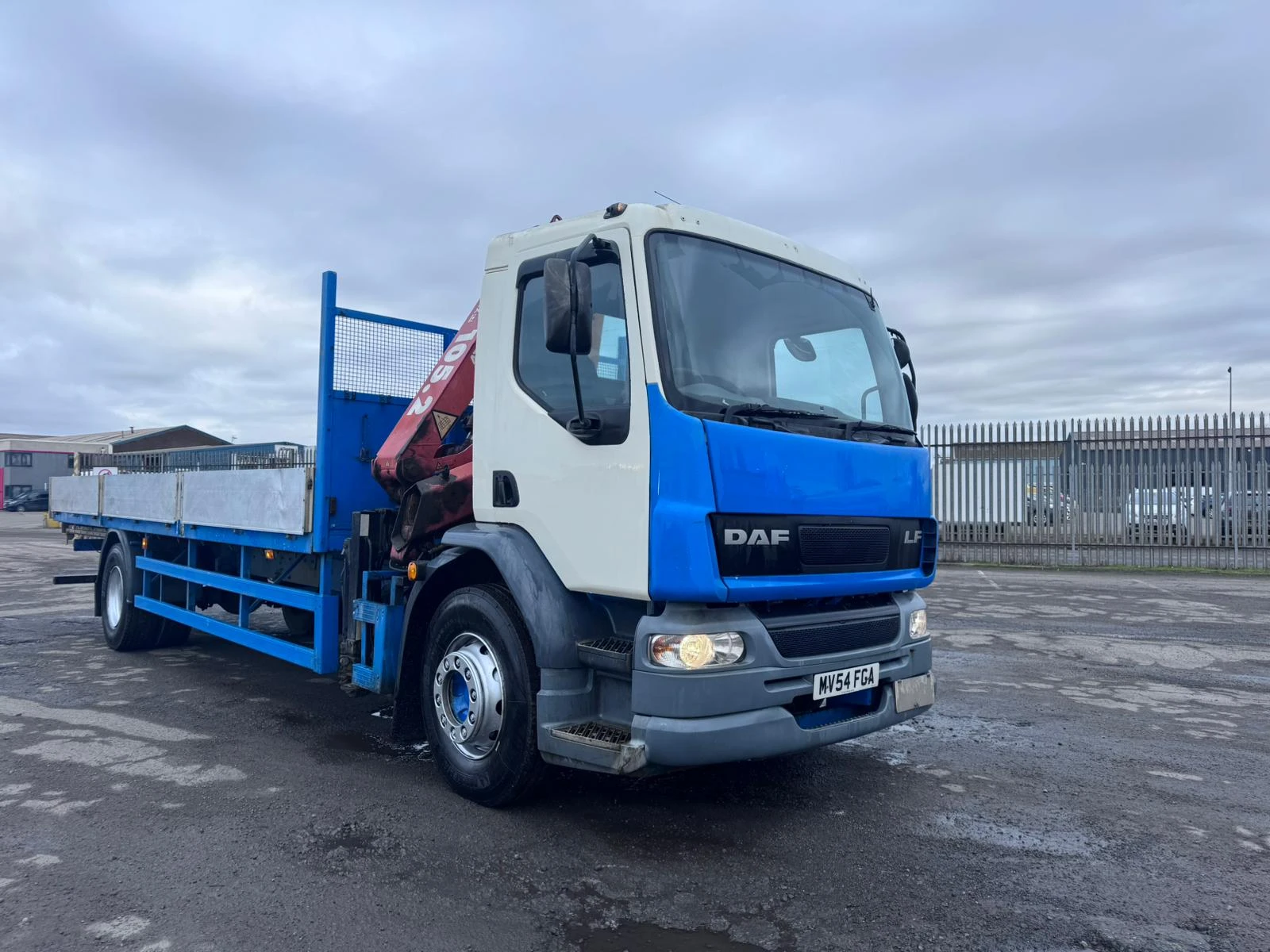
Commercial Vehicles Cyprus – Used Trucks For Sale
Shipping Quality UK Commercial Vehicles to Cyprus
With over two decades of experience, Clugston International is your trusted partner for exporting high-quality, cost-effective used trucks to Cyprus. Our global shipping network covers major cities in Cyprus, including Nicosia, Limassol, Larnaca, and Paphos. We have a proven track record of successfully delivering used trucks to customers throughout Cyprus.
Cyprus Transport Market: Where Europe Meets the Middle East
Cyprus occupies a unique position in the commercial vehicle market. As an EU member state with British driving heritage, the island maintains left-hand traffic and right-hand drive vehicles, making UK trucks naturally compatible with Cypriot roads. Yet Cyprus is more than just another European market – it’s a strategic gateway between three continents, with transport demands shaped by tourism, construction, agriculture, and increasingly, energy sector development.
The island’s 9,251 square kilometres support a population approaching 900,000 in the Republic of Cyprus, plus 1.5 million annual tourists who arrive expecting European service standards. This creates transport intensity that challenges operators daily. From Limassol’s bustling port – the island’s commercial gateway – to the agricultural heartlands of Famagusta district, from the tourist developments along Paphos coast to the government and business centre of Nicosia, commercial vehicles keep Cyprus’s economy moving.
Our involvement with Cyprus spans critical periods in the island’s development. We supplied trucks during the construction boom of the early 2000s, helped operators recover after the 2013 financial crisis, and continue supporting the current period of renewed growth driven by technology companies, shipping services, and energy discoveries. This long-term perspective has taught us what actually works in Cypriot conditions versus what merely looks good on paper.
The discovery of natural gas reserves in Cyprus’s Exclusive Economic Zone has transformed economic prospects, creating new transport demands that barely existed a decade ago. Equipment for exploration, materials for infrastructure development, specialised vehicles for industrial applications – each represents opportunities for operators with appropriate vehicles. Meanwhile, traditional sectors like tourism and agriculture continue evolving, requiring transport solutions that adapt to changing market demands.
Understanding Cyprus’s Operational Challenges
Cyprus’s Mediterranean island geography creates specific challenges that continental operators rarely face. Summer temperatures regularly exceed 40°C, particularly in the Mesaoria plain between the Troodos and Kyrenia mountain ranges. This heat, combined with humidity from the surrounding sea, creates conditions that stress cooling systems beyond typical European specifications. Vehicles that perform adequately in UK summers can overheat rapidly in Cypriot conditions without proper preparation.
The road network reflects Cyprus’s complex history. British colonial infrastructure forms the backbone, subsequently modernised with EU funding but retaining characteristics that challenge modern commercial vehicles. The A1 motorway from Nicosia to Limassol represents modern European standards, but venture into the Troodos mountains or rural districts and conditions change dramatically. Hairpin bends designed for donkey carts now carry trucks supplying mountain villages. Gradients that test brake systems descend from 1,952-metre Mount Olympus to sea level. These aren’t occasional challenges – they’re daily realities for many operators.
Urban congestion has worsened dramatically as vehicle ownership rates among Europe’s highest combine with infrastructure struggling to keep pace. Nicosia’s divided status complicates traffic patterns, forcing commercial vehicles through bottlenecks that didn’t exist when the city was unified. Limassol’s rapid expansion has created suburban sprawl where delivery trucks navigate residential streets never designed for commercial traffic. Larnaca and Paphos, transformed by tourism and expatriate communities, present their own challenges of seasonal variation and diverse customer expectations.
The Cypriot economy’s structure creates distinct transport patterns. The service sector, dominated by tourism, financial services, and shipping, generates year-round demand with dramatic seasonal peaks. Hotels from Ayia Napa to Coral Bay require constant supply chains – food, beverages, linens, maintenance materials. The financial sector centred in Nicosia and Limassol creates demand for secure document transport and time-critical deliveries. Shipping services based around Limassol port need reliable vehicles for ship supply and crew transport.
Construction continues driving substantial transport demand despite past boom-bust cycles. Major projects like integrated casino resorts, marina developments, and residential complexes for foreign investors require everything from concrete delivery to specialised equipment transport. The vehicles serving these projects must handle both modern highway transport and challenging site access, often on the same journey.
Agriculture, whilst declining in economic importance, generates seasonal transport surges that strain available capacity. Citrus harvests from December through May require careful handling to maintain export quality. Potato crops from the red soil areas around Kokkinochoria need rapid transport to packing stations. The famous Commandaria wine region’s grape harvest demands vehicles that can navigate narrow village streets whilst protecting valuable cargo. Each agricultural sector has specific requirements that generic vehicles cannot address effectively.
Vehicle Specifications That Succeed in Cyprus
Understanding which specifications work in Cyprus requires appreciating how local conditions differ from typical European operations. Engine cooling provides a prime example. Standard European cooling packages assume ambient temperatures below 35°C with reasonable airflow from highway speeds. Cyprus regularly sees 40°C+ temperatures with vehicles crawling through congested traffic or climbing mountain grades at low speed. Enhanced cooling capacity isn’t optional – it’s essential for reliability.
Air filtration demands special attention due to dust conditions that vary seasonally. Winter rains keep dust minimal, but summer months bring Saharan dust storms that clog standard filters rapidly. Agricultural areas generate their own dust clouds during harvest. Construction sites create localised dust problems year-round. Vehicles need filtration systems with higher capacity and easier maintenance access than standard specifications provide.
Transmission selection significantly impacts operational success. Manual gearboxes traditionally dominated due to lower initial cost and mechanical simplicity. However, automated transmissions increasingly prove their worth in Cyprus’s varied conditions. Stop-start urban traffic wears clutches rapidly. Mountain operations benefit from automatic gear selection that prevents driver error. Fuel economy improves through optimised shift patterns. The higher initial cost often repays itself through reduced maintenance and improved efficiency.
Brake specifications require careful consideration given Cyprus’s topography. Standard European brake systems assume relatively flat operation with occasional mountain driving. Cypriot operators might descend from Troodos to coast multiple times daily, generating heat that standard brakes cannot dissipate effectively. Enhanced brake packages with larger drums or discs, improved cooling, and auxiliary retardation systems prove essential for safe operation.
Suspension configuration affects both vehicle longevity and cargo protection. Cyprus’s road quality varies dramatically – smooth highways connect with potholed rural roads, sometimes within the same delivery route. Vehicles need suspension robust enough for poor surfaces yet sophisticated enough to protect fragile cargo. Air suspension increasingly proves valuable for its adaptability to varying conditions and loads.
Mercedes-Benz: The Premium Choice for Cyprus
Mercedes-Benz trucks have established dominant market presence in Cyprus through decades of proven performance. The three-pointed star carries prestige that translates into business advantages – government contracts often specify Mercedes, premium hotels prefer Mercedes-liveried suppliers, and the brand’s reputation opens doors that others find closed.
The Actros range serves heavy-duty applications across Cyprus excellently. The Actros 1844 particularly suits long-distance operations between major cities and international routes to ports. Its 440 horsepower provides ample reserves for mountain climbing whilst maintaining fuel economy on highway sections. The PowerShift 3 automated transmission has proven particularly valuable in Cyprus’s varied terrain, optimising gear selection for conditions drivers might misjudge.
For regional distribution, the Axor series offers ideal capability. The Axor 1828 handles construction supply, agricultural transport, and general haulage with equal competence. Its 280 horsepower suits most Cypriot applications without excess consumption. The robust construction that characterises Mercedes commercial vehicles means these trucks handle overloading – regrettably common despite regulations – better than vehicles engineered to precise limits.
The Atego range has revolutionised urban delivery in Cypriot cities. The Atego 1218 navigates Nicosia’s narrow streets effectively whilst providing meaningful payload capacity. Hotels and restaurants particularly value these vehicles for their ability to access difficult delivery points whilst maintaining professional appearance. The 1524 model adds power for heavier urban work without sacrificing manoeuvrability.
Mercedes-Benz’s established dealer network across Cyprus provides crucial support infrastructure. Authorised workshops in Nicosia, Limassol, and Larnaca ensure professional maintenance remains accessible. Parts availability through local stock and rapid European supply means minimal downtime for repairs. This support network transforms Mercedes ownership from risk into manageable investment.
DAF: Operational Economy That Matters
DAF’s engineering philosophy – achieving efficiency through intelligence rather than compromise – resonates strongly with Cypriot operators facing competitive pressure and rising costs. These vehicles deliver economy without sacrificing capability, a combination that proves valuable in Cyprus’s price-sensitive market.
The CF85 has become the vehicle of choice for many international transport operators. Its 460 horsepower from a 12.9-litre engine provides flexibility for Cyprus’s varied conditions. The integrated engine brake proves invaluable on descents from Troodos mountains, preserving service brakes whilst maintaining control. Fuel consumption figures consistently impress operators accustomed to thirstier alternatives.
The CF75 occupies the sweet spot for regional operations. With 360 horsepower, it handles most Cypriot requirements comfortably. Agricultural transporters particularly value this model during harvest seasons when vehicles work intensively. The cab comfort matters when drivers spend long days moving produce from farms to packhouses or ports.
The LF series has transformed thinking about urban distribution. The LF45’s compact dimensions suit Cyprus’s historic city centres perfectly, accessing locations that defeat larger vehicles. Yet it maintains payload capacity that makes economic sense. Supermarket chains operating multiple daily deliveries report significant fuel savings compared to previous fleet vehicles.
DAF’s focus on simplicity without sacrificing sophistication appeals to Cypriot operators. Electronic systems are comprehensive but comprehensible to competent technicians. Service intervals acknowledge real-world conditions rather than laboratory ideals. Parts commonality across the range reduces inventory requirements. It’s practical engineering that acknowledges operational reality rather than theoretical perfection.
Scania: Engineering Excellence for Demanding Operations
Scania’s reputation in challenging environments makes them natural choices for Cyprus’s tougher applications. Mining operations in the Troodos mountains, construction projects in remote locations, agricultural transport from difficult terrain – these demanding roles suit Scania’s over-engineered approach perfectly.
The R-series represents transport capability without compromise. The R440 handles any route Cyprus offers whilst maintaining predictability that operators value. These vehicles climb from sea level to Troodos peaks fully loaded without drama, descend safely with heavy loads, cruise efficiently on highways. It’s versatility that suits Cyprus’s varied geography perfectly.
The P-series makes Scania capability accessible to more operators. The P280 particularly suits construction applications where durability matters more than ultimate performance. The robust construction that characterises Scania design means these vehicles survive site conditions that sideline lesser trucks. Lower operating costs compared to premium models attract companies building their fleets gradually.
The G-series addresses specialised requirements with typical Swedish thoroughness. The G420 excels at tanker operations where stability matters as much as power. These vehicles incorporate safety margins that prevent accidents rather than merely surviving them – crucial when carrying hazardous materials through populated areas or on challenging mountain roads.
Scania’s modular construction philosophy benefits Cypriot operators through easier maintenance and parts availability. Components interchange across models where possible, reducing inventory requirements. Technicians familiar with one model can work on others with minimal additional training. This practical approach reduces operating costs whilst maintaining Scania’s engineering excellence.
Volvo: Safety and Comfort Combined
Volvo’s emphasis on safety resonates in Cyprus where road accidents remain concerningly frequent. The combination of tourist drivers unfamiliar with local roads, varying driving standards, and challenging conditions makes accident prevention valuable beyond simple economics.
The FH series brings premium features that transform driver experience. The FH13 provides maximum power for heavy-duty applications whilst maintaining Volvo’s safety standards. The I-Shift transmission adapts intelligently to conditions, crucial when routes include everything from congested cities to mountain passes. Driver comfort features reduce fatigue during long operational days.
The FM range balances capability with accessibility. The FM 330 suits varied Cypriot requirements from agricultural transport to construction support. Safety systems including emergency brake assistance and stability control provide protection when driver attention lapses. Insurance companies increasingly recognise these advantages through premium reductions.
The FL series makes Volvo ownership possible for smaller operators. Despite its entry-level positioning, safety systems remain comprehensive. The FL250 provides ideal capability for urban distribution whilst maintaining build quality that protects drivers in accidents. Small companies report that Volvo ownership helps secure contracts with safety-conscious clients.
Alternative Brands: Isuzu, MAN, and Others
Japanese engineering from Isuzu has found success in Cyprus’s medium-duty segment. The N-series, particularly NPR models, provides reliability that operators trust completely. Mechanical simplicity becomes advantageous in rural areas where technical support remains limited. These vehicles might lack European sophistication but compensate through dependability and lower operating costs.
MAN trucks offer German engineering with practical design. The TGL series suits urban distribution excellently, combining compact dimensions with robust construction. The TGM range addresses heavier requirements without excessive complexity. MAN’s approach – sophisticated but serviceable – appeals to operators seeking German quality without premium pricing.
Renault trucks provide French alternatives that some operators prefer. The T-series competes in long-distance segments whilst the D-range handles distribution effectively. Iveco offers Italian engineering with particular strength in light commercial segments. Each brand brings specific advantages that suit certain operational requirements better than others.
Industry Applications and Solutions
Tourism sector support requires vehicles beyond basic delivery trucks. Hotels need everything from airport shuttles to specialised laundry vehicles. Restaurants require multi-temperature refrigerated trucks maintaining different zones simultaneously. Catering companies need vehicles adaptable from delivery to mobile kitchen configuration. Each application demands specific solutions rather than generic vehicles hopefully adapted.
Construction logistics face unique Cypriot challenges. Limited space on island means just-in-time delivery becomes essential – materials cannot be stockpiled extensively. Concrete must arrive precisely when needed for continuous pours. Steel deliveries must coordinate with crane availability. Equipment transport must navigate from ports to sites that might be accessible only via narrow village roads. The vehicles managing these logistics need absolute reliability and precise timing capability.
Agricultural transport varies dramatically by crop and season. Citrus fruits require careful handling to maintain export quality during transport to packing houses. Potatoes from the red soil areas need rapid movement to prevent quality deterioration. Table grapes demand temperature-controlled transport to preserve freshness. Halloumi cheese production generates year-round refrigerated transport demand. Each agricultural sector benefits from vehicles specified appropriately rather than adapted hopefully.
Energy sector development creates entirely new transport categories. Equipment for gas exploration arrives through Limassol port requiring specialised transport to operational bases. Pipeline construction needs vehicles capable of handling large-diameter pipes on routes that might not officially exist. Support services require reliable vehicles reaching offshore supply bases on precise schedules. These emerging requirements provide opportunities for operators with appropriate vehicles.
Financial Considerations for Cyprus Imports
Operating costs include surprises for those unfamiliar with island economics. Parts cost more due to shipping and limited competition. Skilled technicians command premium wages as demand exceeds supply. Fuel prices fluctuate with global markets but always include island transport premiums. These factors make vehicle reliability crucial – breakdown costs exceed simple repair bills through lost revenue and damaged reputation.
Exports & Shipping – From the UK to Cyprus
Our team of experts has in-depth knowledge of exporting and shipping used trucks to Cyprus. We understand the unique challenges and requirements of the Cypriot market, and we are here to provide you with seamless shipping solutions. Whether you need assistance with shipping quotes, insurance, or customs clearance, we are ready to help.
Shipping to Cyprus typically utilises Limassol port, the island’s primary commercial gateway. The port’s modern facilities handle vehicle imports efficiently, with established procedures for commercial vehicle clearance. Larnaca port provides alternative access, particularly useful for vehicles destined for eastern districts. Transit times from the UK typically range from 10-14 days depending on shipping routes and vessel schedules.
Documentation requirements for Cyprus follow EU standards with additional local requirements. Commercial invoices must be detailed and accurate for VAT calculation. Registration documents must be original or certified copies. Service history helps establish value and condition for insurance purposes. We handle all documentation comprehensively, ensuring smooth clearance without delays.
Contact Clugston International Today
Ready to import a used truck to Cyprus or explore our global shipping options?
Get in touch with us for:
- Competitive quotes tailored to the Cypriot market and international destinations
- Expert guidance on selecting the right trucks for your business in Cyprus or elsewhere
- Assistance in locating and sourcing specific truck models
- Information on the export process to Cyprus and other countries worldwide
Paul – International Sales Manager
Trust Clugston International for your used truck export needs in Cyprus and beyond. With our extensive experience, diverse selection, and understanding of the Cypriot market and global trade, we are here to support your business growth and success across continents.