Used Trucks for Export to Malta – UK Commercial Vehicle Specialists
British Commercial Vehicles for Malta’s Island Economy
For more than twenty years, Clugston International has understood something that many exporters miss about Malta – this isn’t just another small European market. It’s a dynamic island economy with specific transport challenges that require careful vehicle selection and genuine expertise.
Malta’s 316 square kilometres pack in half a million residents plus three million annual tourists, creating transport intensity that would challenge cities ten times larger. Every morning, trucks navigate streets laid out centuries before motorised transport existed. They squeeze past limestone walls in Mdina that have stood since medieval times, thread through Valletta’s UNESCO World Heritage streets, and somehow manage to deliver everything from fresh bread to construction materials without grinding the island to a standstill.
We’ve worked with operators across Malta’s commercial landscape for two decades, learning lessons that specifications sheets never teach. Why do certain Mercedes Atego configurations thrive in Maltese conditions whilst others struggle? How does Malta’s limestone dust affect air filtration systems differently than typical European conditions? What makes a truck suitable for navigating the notorious Hill of Targa Gap whilst fully loaded? These aren’t theoretical questions – they’re practical challenges our customers face daily, and we’ve learnt the answers through years of feedback and observation.
Malta’s Unique Commercial Vehicle Operating Environment
Malta’s geography creates transport challenges found nowhere else in Europe. The archipelago – Malta, Gozo, and Comino – spans just 316 square kilometres, yet supports a population density exceeding 1,600 people per square kilometre, Europe’s highest. Add three million annual tourists, and you have transport demands that would strain infrastructure anywhere, let alone on islands where expansion options remain limited.
The road network tells its own story. Malta has 2,254 kilometres of roads, with 88% paved but many dating from periods when a laden donkey cart represented heavy traffic. Streets in Valletta, Mdina, and the Three Cities were carved from limestone when the Knights of Malta ruled. Today’s truck operators must navigate these same streets, delivering to restaurants in Valletta’s Republic Street, construction sites behind Sliema’s waterfront, hotels overlooking St. Julian’s Bay. It’s a daily ballet of logistics that demands vehicles with specific capabilities.
Climate adds another dimension. Malta’s Mediterranean weather seems benign – hot, dry summers and mild winters. Yet the scirocco wind brings Saharan dust that clogs filters faster than any European condition. Winter storms generate salt spray that corrodes exposed metal within months. The limestone dust from quarrying and construction creates an alkaline environment that attacks rubber seals and gaskets. Vehicles must handle these conditions whilst maintaining reliability for intensive daily operations.
The economy drives everything. Tourism contributes 27% of GDP, construction another 8%, with manufacturing and services completing the picture. Each sector generates specific transport requirements. Hotels need daily deliveries of everything from fresh produce to laundry. Construction sites require materials that often originate from quarries just kilometres away yet must navigate through tourist areas. Manufacturing, particularly pharmaceuticals and electronics, demands reliable distribution to Malta International Airport for export. It’s complexity that belies Malta’s compact size.
Traffic patterns in Malta defy conventional planning. Rush hour isn’t just morning and evening – it’s whenever cruise ships disgorge thousands of tourists into Valletta, when shifts change at Smart City Malta, when schools release students across the island. Trucks must operate within this chaos, maintaining delivery schedules whilst navigating streets where a single breakdown can cause island-wide congestion. Vehicle reliability isn’t just important – it’s essential for preventing economic disruption.
Understanding Malta’s Commercial Sectors
The tourism industry dominates Malta’s service requirements. Hotels ranging from boutique properties in converted palazzos to massive resorts in St. Julian’s all need reliable supply chains. A five-star hotel in Valletta might require six deliveries daily – fresh produce at dawn, beverages mid-morning, laundry returns at noon, dry goods afternoon, speciality items for evening service, waste collection at night. Each delivery must navigate narrow streets, often reversing distances that would concern drivers anywhere else.
Restaurant supply presents particular challenges. Malta has over 2,000 restaurants, many in locations that seem impossible for vehicle access. Yet somehow, refrigerated trucks deliver fresh fish to restaurants in Marsaxlokk’s harbour, frozen goods to Mdina’s hilltop establishments, beverages to beach clubs accessible only via coastal roads carved from cliffs. The vehicles managing these deliveries need more than just refrigeration – they need dimensions calculated in centimetres and drivers with skills bordering on artistry.
Construction has transformed Malta’s landscape, with development seemingly continuous despite the island’s size. Tower cranes punctuate the skyline from Sliema to St. Paul’s Bay. Each represents transport movements – concrete deliveries that cannot be delayed, steel beams that must arrive in sequence, glass panels requiring careful handling. The trucks serving these sites must handle substantial loads whilst accessing locations often surrounded by existing buildings, with turning space that would challenge smaller vehicles.
The quarrying industry, extracting Malta’s limestone, creates unique requirements. Trucks must handle loads of dense stone, operate in dusty conditions that destroy inadequate filtration systems, navigate from quarry faces to processing plants via roads that might charitably be called challenging. These aren’t occasional duties – they’re daily operations where component failure means production stops and contracts fail.
Port operations at Valletta’s Grand Harbour and Malta Freeport handle 3.5 million tonnes of cargo annually. Every container must move from ship to destination, whether that’s a warehouse in Hal Far Industrial Estate or direct delivery to retailers. The trucks handling this cargo face intensive utilisation – sometimes three trips daily between port and destination, each journey through Malta’s congested road network.
Vehicle Specifications That Work in Malta
Successful vehicle selection for Malta requires understanding subtle specification differences that determine operational success. Engine sizing provides a perfect example. Malta’s compact geography might suggest smaller engines suffice, but the reality proves different. Constant stop-start operation, frequent maximum-weight loading, and air conditioning running continuously in summer create stress that destroys under-powered vehicles.
The Mercedes Atego 1218, for instance, with its 7.5-tonne capacity and 175-horsepower engine, might seem adequate on paper. In practice, operators report the 1524’s 240-horsepower provides better fuel economy through reduced stress, lower maintenance from less strain, and improved driver satisfaction from adequate performance reserves. It’s counterintuitive but proven through operational experience.
Transmission choice critically affects Malta operations. Manual gearboxes traditionally dominated, but automated transmissions increasingly prove their worth. In stop-start traffic, automated systems reduce driver fatigue dramatically. Clutch replacement, expensive when parts must be imported, becomes virtually eliminated. Fuel consumption improves through optimal shift points. The initial cost premium repays itself through operational advantages.
Wheelbase selection determines manoeuvrability fundamentally. Malta’s turning circles often require multiple manoeuvres where longer vehicles simply cannot proceed. Yet shorter wheelbases reduce load space and stability. The sweet spot for many operations proves around 3,900-4,200mm – long enough for reasonable capacity, short enough for urban manoeuvrability. We’ve seen operators specify longer vehicles for theoretical capacity then discover they cannot access half their delivery points.
Cooling system specification matters enormously. Malta’s summer temperatures reach 40°C, but it’s the operational pattern that stresses cooling systems. Slow-speed operation provides minimal airflow. Frequent stops allow heat accumulation. Limestone dust clogs radiators rapidly. Vehicles need enhanced cooling capacity with easily cleaned radiators and robust fan drives. Standard European specifications often prove inadequate.
Body configuration influences operational efficiency significantly. Dropside bodies suit construction but prove slow for multiple deliveries. Box bodies protect cargo but limit access. Curtainsiders offer flexibility but add width in narrow streets. The choice depends entirely on operational requirements – there’s no universal solution, only appropriate selection for specific applications.
Proven Truck Models for Maltese Operations
Mercedes-Benz has earned respect across Malta through consistent performance in challenging conditions. The Atego range particularly excels, with the 1524 model becoming almost standard for serious operators. Its combination of adequate power, compact dimensions, and proven reliability suits Malta perfectly. The availability of parts through European networks means maintenance remains manageable even on an island where everything must be imported.
The Sprinter range fills the gap between vans and trucks effectively. The 516 CDI with 7.5-tonne capacity handles urban delivery efficiently whilst accessing locations that defeat larger vehicles. Hotels particularly value these vehicles for their ability to navigate underground car parks and tight service areas. Several major hotel chains have standardised on Sprinters for their versatility.
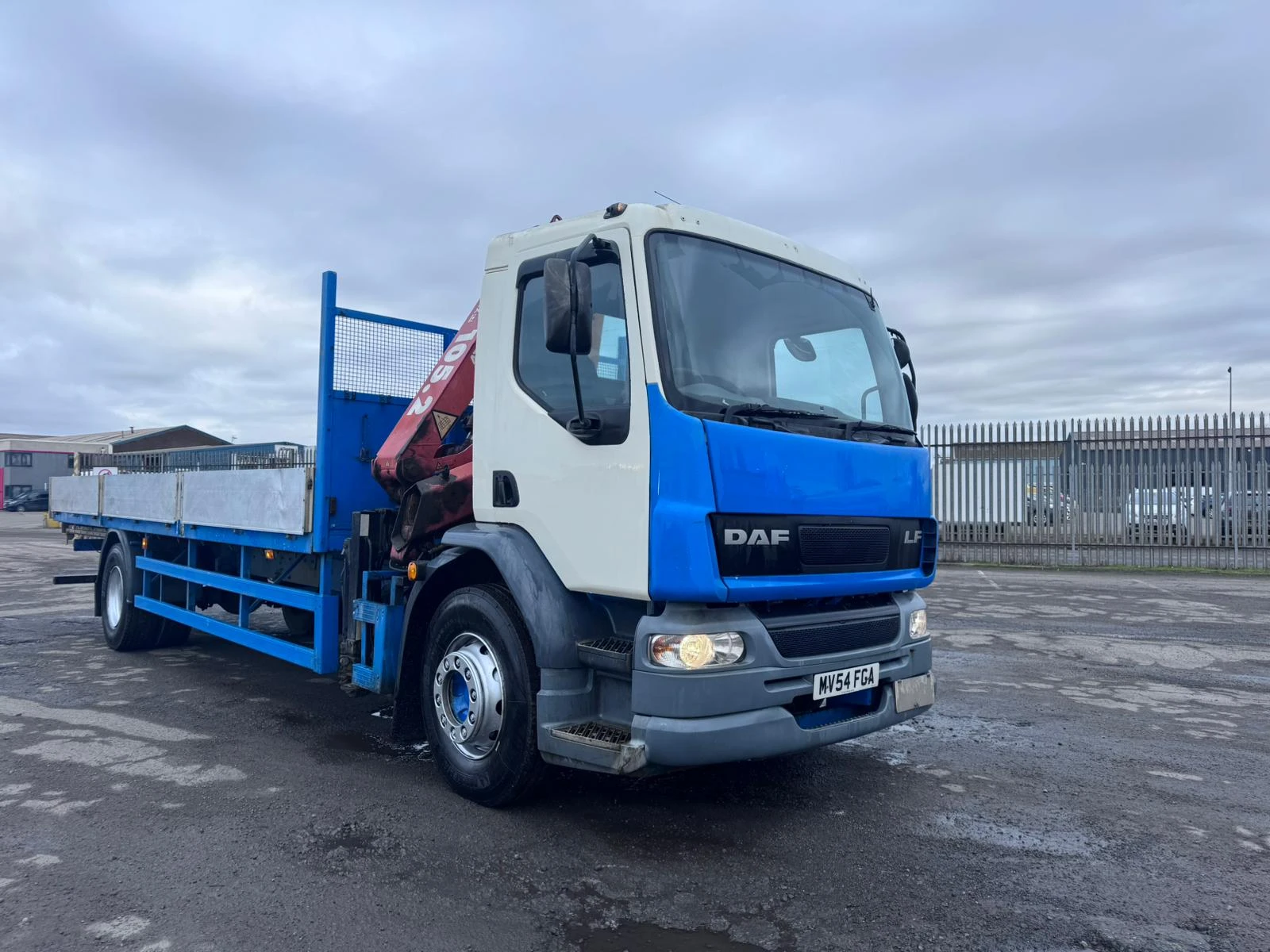
DAF’s focus on operational economy resonates with Maltese operators managing competitive markets. The LF45 has proven particularly successful in distribution roles, its compact dimensions suiting Malta’s urban environment whilst delivering fuel economy that affects profitability directly. Operators report consumption figures 20% better than older alternatives – savings that matter when every euro counts.
The CF65 suits heavier applications without excessive size. Construction companies value its ability to handle meaningful payloads whilst remaining manoeuvrable enough for site access. The AS Tronic automated transmission has proven particularly valuable in Malta’s stop-start conditions, eliminating clutch wear whilst improving fuel economy through optimal shifting.
Volvo’s safety emphasis matters in Malta’s dense traffic environment. The FL range provides sophisticated safety systems that prevent accidents rather than merely surviving them. Electronic stability control proves valuable on coastal roads where crosswinds can destabilise loaded vehicles. Emergency brake assistance reduces collision severity when tourist pedestrians appear unexpectedly. These aren’t luxuries – they’re investments in operational continuity and reputation protection.
Scania brings heavy-duty capability when operations demand ultimate reliability. The P250 suits regional distribution perfectly, providing adequate power without excess consumption. Construction companies particularly value Scania’s robust construction that survives overloading – never recommended but sometimes unavoidable in competitive markets. The maintenance intervals achievable with Scania vehicles reduce downtime, crucial when vehicle availability determines contract fulfilment.
Isuzu offers simplicity that some operations value highly. The N-series, particularly NPR models, provides reliability through mechanical simplicity rather than electronic sophistication. For operators with limited technical support, this approach proves advantageous. Family-run businesses often prefer Isuzu’s straightforward maintenance requirements and reasonable parts costs.
MAN trucks offer German engineering with pragmatic design. The TGL series works effectively in urban distribution, combining robust construction with manageable dimensions. The TGL 12.220 particularly suits Malta’s tendency toward overloading – while never endorsed, the reality is that competition sometimes forces compromise. MAN’s over-engineered chassis and suspension handle these conditions better than vehicles designed purely for regulated European markets.
Specific Solutions for Maltese Industries
Tourism support requires vehicles beyond simple delivery trucks. Hotels need everything from airport shuttle vehicles to specialised laundry trucks. Restaurants require multi-temperature refrigerated vehicles capable of maintaining different zones for frozen, chilled, and ambient products. Catering companies need vehicles that can transform from delivery truck to mobile kitchen for events. Each application demands specific solutions, not generic vehicles hopefully adapted.
Construction logistics in Malta face unique challenges. Limited space means materials cannot be stockpiled extensively – just-in-time delivery becomes essential. Concrete must arrive precisely when needed, as there’s nowhere to dispose of excess. Steel deliveries must sequence perfectly with crane availability. The trucks managing these logistics need absolute reliability and precise timing capability.
Waste management has become increasingly sophisticated as Malta implements EU environmental directives. Separated collection requires multi-compartment vehicles. Narrow streets demand compact refuse trucks with excellent compaction ratios. Commercial waste from hotels and restaurants needs discrete collection without disturbing guests. The vehicles serving these requirements must combine sophisticated mechanisms with robust construction that survives intensive daily use.
Inter-island transport between Malta and Gozo creates specific requirements. Vehicles must efficiently use ferry space whilst providing meaningful cargo capacity. The Gozo Channel crossing adds time and cost to every journey, making reliability essential. Breakdown on Gozo might mean days waiting for repair, as technical support remains limited compared to Malta.
Agricultural transport, while limited, exists particularly on Gozo. Small farms producing vegetables, dairy, and livestock need vehicles capable of accessing rural locations whilst handling varied cargo types. The same truck might transport feed Monday, vegetables Tuesday, equipment Wednesday. Versatility matters more than specialisation for these operations.
Financial and Regulatory Considerations
Malta’s EU membership simplifies certain aspects whilst complicating others. Vehicles must meet EU emissions standards, which eliminates older, cheaper options. Euro 5 minimum has become standard, with Euro 6 increasingly expected. This raises initial costs for potential buyers.
Operational costs in Malta include surprises for those unfamiliar with island economics. Parts cost more than mainland Europe due to shipping and limited competition. Skilled technicians command premium wages as demand exceeds supply. Fuel prices fluctuate with global markets but always include island transport premiums. These factors make vehicle reliability even more crucial – breakdown costs exceed simple repair bills.
Making Your Malta Import Decision
The temptation to buy cheaper, older vehicles often proves false economy when maintenance costs and reliability issues emerge. Quality vehicles with documented maintenance history provide better long-term value despite higher initial costs.
Support infrastructure should influence vehicle selection. If you operate from Valletta with access to multiple dealers, sophisticated vehicles remain maintainable. If you’re based in Gozo or serving remote locations, simplicity becomes advantageous. Parts availability, technical support, and maintenance facilities all affect total operating costs significantly.
Contact Our Malta Export Team
Ready to strengthen your Malta operations with quality used trucks from the UK? Our team combines extensive knowledge of European commercial vehicle markets with specific understanding of Malta’s unique operating environment.
Whether you’re expanding tourism-related operations, developing construction projects, establishing distribution networks, or supporting port and logistics operations, we can help identify vehicles that match your specific Malta requirements and budget.
Our Malta export services include:
- Competitive quotations tailored specifically to Malta’s market conditions and Mediterranean shipping
- Expert guidance on selecting trucks suited to Malta’s urban environment and operational requirements
- Specialist sourcing for particular models, brands, and configurations suited to island operations
- Reliable delivery to Malta’s port facilities with efficient onward transport coordination
- Expertise in serving commercial operators throughout the Mediterranean region
Paul – International Sales Manager
Direct Line/WhatsApp: +44 7712 674458
Email: sa***@*************ng.com
From our UK base, we serve commercial operators across Malta and throughout Europe’s diverse transport markets. Contact Clugston International today to discover how quality used trucks can support your business growth in Malta’s dynamic commercial vehicle market.